We’ve all been there. That nagging feeling that no matter how you set your thermostat, your home is either too warm or too cool. You fiddle with the dial, a degree here, a degree there, and somehow, it never feels quite right. It’s a common experience, so much so that many of us have just accepted it as a fact of life: achieving and maintaining a perfectly comfortable home temperature is a constant, often frustrating, battle. But what if I told you that the very device we rely on to control our comfort, the humble thermostat, might be contributing to the problem? What if the “perfect” temperature isn’t as simple as a number on a dial, and our belief that it is, is the real myth?
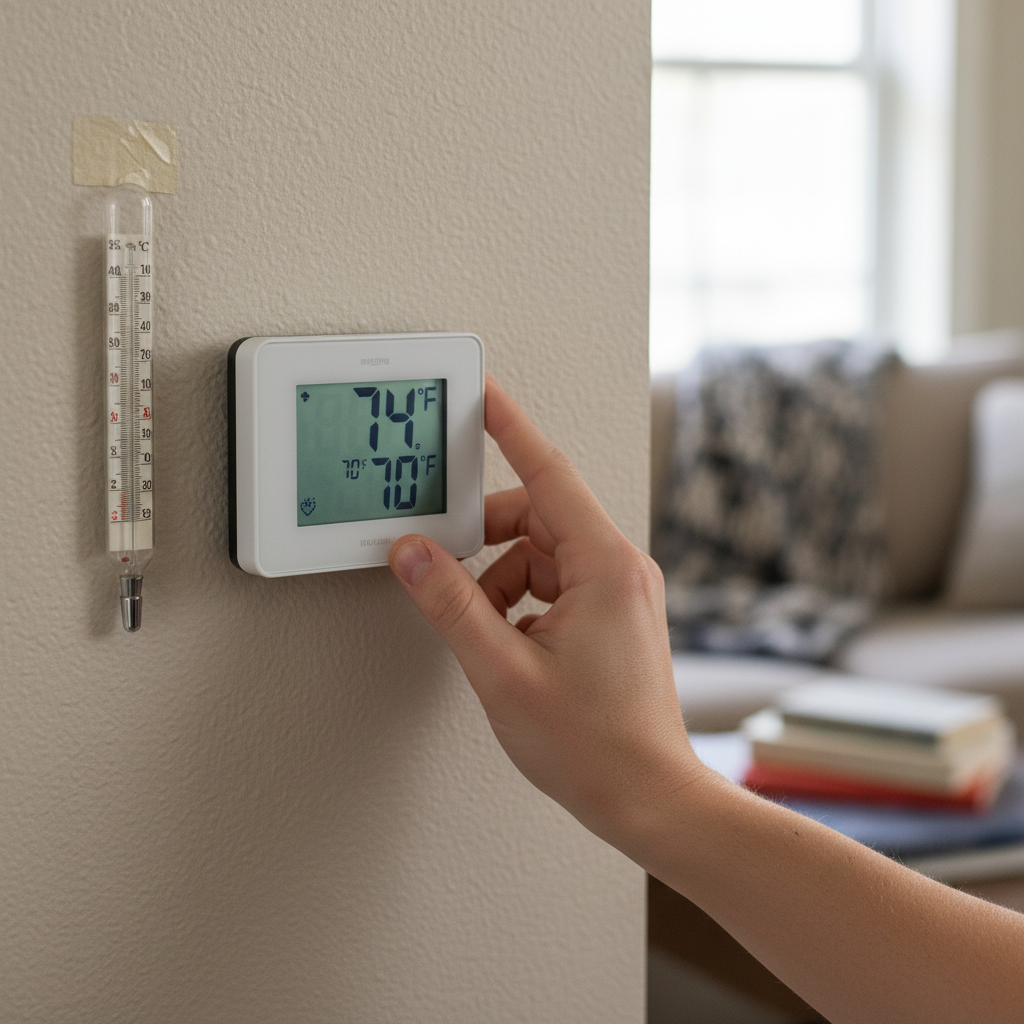
This isn’t about blaming technology. Thermostats, especially the modern digital ones, are remarkable pieces of engineering. They’re designed to measure temperature and activate your heating or cooling system accordingly. The logic seems sound: set it to 22°C, and it should keep your house at 22°C. Simple, right? This is why the myth persists. It’s rooted in a very basic, understandable cause-and-effect relationship. We believe if we tell the machine a number, it will deliver that number. It’s a promise of control, of predictable comfort, and who wouldn’t want that?
Why the “Perfect” Temperature is More Than Just a Number
The idea of a single “perfect” temperature for a home is a comforting illusion, but it falls apart when we consider the myriad factors that influence our perception of comfort. What feels perfect to one person might be a chilly breeze to another. Even for the same individual, comfort levels fluctuate based on activity, clothing, humidity, and even what they’ve eaten. This variability is where the thermostat’s simple numerical goal starts to feel inadequate. It’s like trying to measure the happiness of a crowd with a single thermometer; it misses the nuances.
The origin of this myth is likely a combination of technological simplicity and our own innate desire for consistent comfort. Early thermostats were mechanical, and their limitations in precision might have led to wider temperature swings, making precise “perfect” settings feel elusive. As technology advanced, we expected perfect control, but the reality is that our bodies and environments are far more complex than a simple sensor and a switch. We still cling to the idea of a perfect number because it’s an easy concept to grasp, a simple target to aim for in a world that often feels unpredictable.
What Actually Happens: The Dance of Heating and Cooling
In reality, your thermostat is doing its best, but it’s working with a system that has inherent limitations. When you set your thermostat to, say, 22°C, it’s not a magical force field ensuring that exact temperature. Instead, it’s a signal to your HVAC (Heating, Ventilation, and Air Conditioning) system. Your system will work to reach that temperature, but there’s always a slight lag, an overshoot, or a undershoot. This is because air doesn’t instantly distribute evenly throughout your home, and your system’s components have their own operational cycles.
Consider a hot summer day. You set your AC to 23°C. The thermostat senses the current temperature is 28°C. It signals the AC to turn on. The AC blows cold air, and gradually, the temperature in the room where the thermostat is located drops. As it approaches 23°C, the thermostat signals the AC to turn off. However, the residual cold air in the ducts continues to circulate, and the heat from other parts of the house hasn’t completely dissipated. So, the temperature might dip to 21.5°C before slowly creeping back up. Then, it rises past 23°C, perhaps to 24°C, before the thermostat calls for cooling again. This cycle of turning on and off, with slight variations around the set point, is what happens in real life. It’s not a constant, unwavering temperature, but a range.
This is also true for heating. In winter, when the thermostat calls for heat, the furnace kicks in. The warm air circulates, and the temperature rises. Once it hits the target, the furnace shuts off. But the ducts and radiators retain heat, continuing to warm the space for a while. The temperature might climb a degree or two above the set point before it starts to drop again, triggering the furnace to cycle back on. This “swing” is a normal part of how most residential HVAC systems operate. Many programmable thermostats allow you to adjust this swing, often called the differential or deadband, but it’s a trade-off. A smaller swing means more frequent cycling, which can increase wear and tear on your system. A larger swing means wider temperature fluctuations.
The placement of your thermostat also plays a huge role. A thermostat on an exterior wall, in direct sunlight, or near a heat-generating appliance (like a lamp or a TV) will get skewed readings. It might think the room is warmer than it is and shut off the cooling prematurely, or turn on the heat when it’s not needed. Conversely, a thermostat in a drafty area might constantly call for heating or cooling, leading to energy waste and discomfort elsewhere in the house.
Modern smart thermostats, like those that can be controlled via apps on your phone, offer more sophisticated control and learning capabilities. They can learn your habits and adjust temperatures automatically to optimize for comfort and energy savings. Some even factor in external weather data. However, even these advanced systems are still working with the same fundamental physics and HVAC limitations. They are better at managing the system and learning patterns, but they can’t magically eliminate the inherent temperature swings or the complexities of heat transfer within your home.
Common Misunderstandings About Home Comfort
One of the biggest misunderstandings is that a thermostat’s job is to maintain an *exact* temperature. In reality, its job is to maintain a temperature *within a range*. This range is often referred to as the thermostat’s “swing” or “differential.” If you set your thermostat to 22°C with a 1°C swing, it might turn on the heat when the temperature drops to 21.5°C and turn it off when it reaches 22.5°C. Similarly, for cooling, it might turn on at 22.5°C and turn off at 21.5°C. This creates a comfortable, albeit fluctuating, environment.
Another common misunderstanding is that setting your thermostat to a very low temperature in the summer (e.g., 18°C) will cool your house down faster. This is a myth. Your air conditioner will run at its maximum capacity regardless of the specific temperature you set it to, until it reaches that set point. Setting it lower simply means it will run for longer, potentially leading to overcooling and higher energy bills, without actually speeding up the cooling process. The same applies to heating in the winter; setting your thermostat to a very high temperature won’t make your house heat up any faster.
People also often underestimate the impact of insulation, drafts, and window coverings on maintaining a stable temperature. They might crank up the thermostat, thinking the system is faulty, when the real issue is heat escaping through poorly insulated walls or windows. We tend to focus on the control device (the thermostat) rather than the performance of the building envelope itself.
The complexity of air circulation is another point of confusion. Even if your thermostat is perfectly placed and your HVAC system is functioning optimally, the temperature can vary significantly between rooms, especially in larger homes or those with open-plan layouts. This is due to factors like the number and placement of vents, furniture obstructing airflow, and how well insulated different areas are. We expect a uniform temperature, but physics dictates otherwise without careful design and management.
Finally, there’s the misconception that “set it and forget it” is the best approach. While programmable and smart thermostats offer convenience, manually adjusting them based on occupancy and actual needs can lead to significant energy savings and improved comfort. For example, there’s no need to keep the house at a comfortable temperature when everyone is at work or school. Many modern systems have features to automate this, but understanding *why* these adjustments matter is key.
What Matters Instead: A Holistic Approach to Home Comfort
Instead of chasing a mythical “perfect” temperature, focus on creating a comfortable and efficient home environment through a more holistic approach. This means looking beyond just the thermostat settings and considering several key areas:
- Understanding Your System’s Swing: Familiarize yourself with how your thermostat and HVAC system operate. What is the typical temperature fluctuation around your set point? Often, a swing of 1-2 degrees Celsius is barely noticeable and allows your system to run more efficiently and with less wear.
- Thermostat Placement is Crucial: Ensure your thermostat is located in a central area of your home, away from direct sunlight, drafts, heat-producing appliances, and exterior walls. This provides the most accurate reading of the overall house temperature.
- Seal Air Leaks: Drafts are comfort killers and energy wasters. Check for leaks around windows, doors, electrical outlets, and where pipes or wires enter the house. Sealing these with caulk or weatherstripping can make a significant difference.
- Improve Insulation: Proper insulation in your attic, walls, and crawl spaces is one of the most effective ways to maintain a stable indoor temperature year-round. It acts like a blanket, keeping heat in during winter and out during summer.
- Zoning Your Home: For larger homes or those with significantly different heating/cooling needs in different areas, consider a zoning system. This allows you to control the temperature in different parts of the house independently, saving energy and improving comfort.
- Regular HVAC Maintenance: Just like your car, your HVAC system needs regular tune-ups. Clean filters, checked ductwork, and professionally serviced units ensure optimal performance and efficiency. A well-maintained system will operate more predictably and effectively. This is also a good time to explore options for more advanced thermostats, as mentioned in our related article on mastering home appliances, though that one focuses on microwaves, the principle of smart usage and maintenance applies broadly.
- Smart Thermostat Usage: If you have a programmable or smart thermostat, use it to your advantage. Set back the temperature when you’re sleeping or away from home. Most people can comfortably tolerate a few degrees difference for several hours without noticing.
- Humidity Control: High humidity can make warm temperatures feel hotter, and low humidity can make cold temperatures feel colder. Using a dehumidifier in summer and a humidifier in winter can help you feel more comfortable at less extreme thermostat settings.
2025-2026 Relevance: Smarter Comfort, Not Just Colder or Hotter
In 2025 and 2026, the conversation around home comfort is increasingly shifting towards efficiency and sustainability, driven by rising energy costs and environmental awareness. The myth of the “perfect” temperature is becoming less relevant as people realize that chasing an unattainable ideal is inefficient. Instead, the focus is on achieving *optimal* comfort within a smart, energy-conscious framework.
Smart home technology continues to evolve, offering more personalized climate control. Integration with other smart home devices (like smart blinds that can automatically adjust to block the sun) is becoming more common. The emphasis is on intelligent automation that learns your routines and preferences, rather than just static temperature settings. This “adaptive comfort” approach acknowledges that our needs aren’t constant and that a truly comfortable home is one that responds dynamically to its occupants and the environment.
Furthermore, with increased awareness of climate change, homeowners are more motivated than ever to reduce their energy consumption. Debunking the myth of the “perfect” temperature is a small but significant step in this direction. By understanding what actually happens and focusing on efficiency improvements, individuals can contribute to a larger goal of sustainability without sacrificing their well-being. The goal for 2025-2026 isn’t just to be warm or cool, but to be comfortably warm or cool, intelligently and responsibly.
The Takeaway: Comfort is a Range, Not a Single Point
The idea that there’s a single, fixed “perfect” temperature for your home is a persistent myth. In reality, achieving comfort is a dynamic process influenced by many factors beyond your thermostat’s setting. Your HVAC system operates within a range, and your own perception of comfort varies. Instead of obsessing over a precise number, focus on the fundamentals: a well-maintained and properly insulated home, a strategically placed thermostat, and smart adjustments based on your lifestyle.
Don’t aim for an impossible ideal. Aim for a comfortable, adaptable environment that works with your home’s unique characteristics and your daily rhythm. By understanding the realities of home climate control, you can move beyond the frustration of the chase and embrace a more practical, efficient, and genuinely comfortable living space. As we navigate more sophisticated home technologies, remember that the most effective solutions often involve a blend of smart tech and sound, time-tested principles.
Frequently Asked Questions (FAQs)
Q1: My thermostat always seems to be a degree or two off. Is it broken?
Not necessarily. Most thermostats have a “swing” or “differential” setting, typically around 1-2 degrees Celsius. This means the heating or cooling will cycle on and off within a small range around your set temperature to prevent constant cycling and save energy. It’s a normal part of operation.
Q2: Does setting my thermostat to a very low temperature in summer cool my house faster?
No, this is a common misconception. Your air conditioner will run at its maximum capacity to reach the set temperature, regardless of whether you set it to 20°C or 24°C. Setting it lower will just make it run longer, wasting energy, without speeding up the initial cooling process.
Q3: Why does my house feel colder in one room than another, even with the same thermostat setting?
This is due to variations in insulation, airflow (vent placement and obstructions), and heat loss/gain in different parts of your home. Larger homes or those with open-plan designs often experience temperature gradients. Focusing on insulation and sealing drafts can help create a more uniform temperature.
Q4: Is it better to leave my thermostat at a constant temperature or program it to change?
For most people, programming your thermostat to adjust the temperature when you’re sleeping or away from home leads to significant energy savings and is generally recommended. Smart thermostats can learn your schedule and optimize this for you automatically.
Q5: How important is humidity control for home comfort?
Very important! High humidity can make warm air feel hotter, and low humidity can make cold air feel colder. Controlling humidity with dehumidifiers or humidifiers can allow you to feel comfortable at less extreme thermostat settings, saving energy.
Q6: Should I get a smart thermostat?
If you’re looking to optimize energy savings and gain more control over your home’s climate, a smart thermostat can be a worthwhile investment. They offer features like remote control, learning capabilities, and energy usage reports that can help you fine-tune your comfort and efficiency.
Q7: How often should my HVAC system be serviced?
It’s generally recommended to have your HVAC system professionally serviced at least once a year, typically before the start of the heating season and again before the cooling season. Regular maintenance ensures optimal performance, efficiency, and longevity.