Imagine this: It’s a typical weekday morning. Your alarm blares, jolting you awake. You hit snooze, then scramble to get ready, rushing through your morning routine. Breakfast is a quick grab-and-go, and you’re out the door, already feeling behind. Does this sound familiar? Most of us fall into this cycle, and it’s easy to overlook how small inefficiencies can snowball into a stressful, time-consuming day. But what if you could reclaim those lost minutes and reduce unnecessary risks?
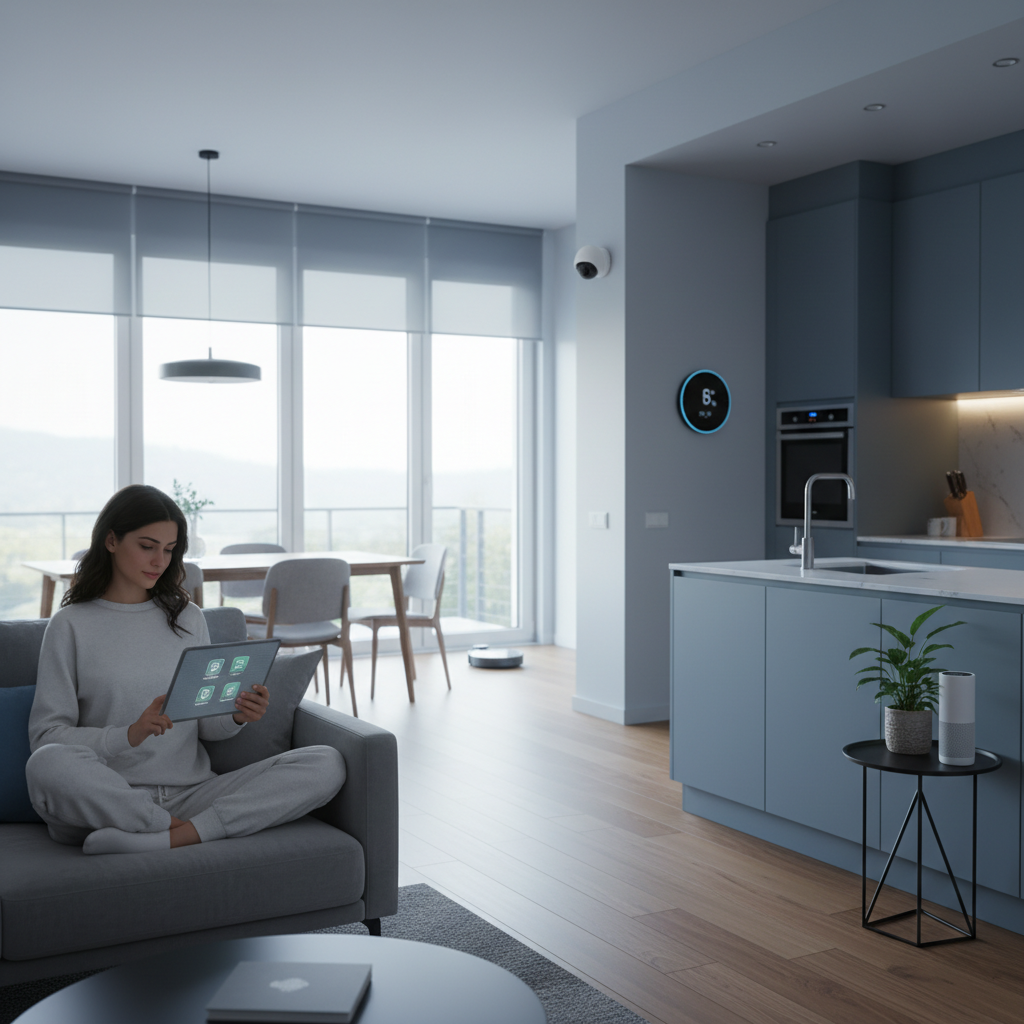
This article will delve into smart home systems and show how they can enhance your life. By adopting some easy modifications, you can transform your daily life to increase efficiency and safety.
The Hidden Costs of Everyday Inefficiencies
Let’s break down that morning routine. Hitting snooze steals precious minutes. Forgetting to lock the door or turn off lights before leaving adds to your stress and energy bill. A cluttered kitchen slows down meal prep, and a disorganized entryway leads to lost items and wasted time. These aren’t huge events, but they’re examples of how our routines can be made better. They might seem insignificant, but over time, these small actions can take a toll.
Inefficiency manifests in different ways:
- Time wasted: Searching for keys, waiting for appliances to warm up, or commuting in heavy traffic.
- Energy drain: Leaving lights on, using inefficient appliances, or poor insulation.
- Safety risks: Unsecured doors and windows, fire hazards, or tripping hazards.
Common Habits That Sabotage Your Day
Many of us are stuck in habits that actively work against us. Here are some of the most common:
- Phone Obsession: Checking your phone first thing in the morning and throughout the day can disrupt focus and increase anxiety. As it is often the first thing people do, they open themselves up to both negative news and stress.
- Poor Planning: Failing to plan meals, outfits, or your route ahead of time.
- Procrastination: Putting off tasks leads to a cluttered to-do list and increased stress.
- Lack of Organization: A cluttered home or workspace leads to wasted time and lost items.
- Neglecting Safety Checks: Ignoring potential hazards like faulty wiring, smoke detectors, or trip hazards.
Simple System-Level Improvements with Smart Home Systems
The good news is that there are many ways to make changes for the better. This is where smart home systems enter the picture, and there are several ways to improve your life.
Safety First: Smart Security Systems
Smart security systems offer a vital layer of protection. These systems can include:
- Smart Locks: Eliminate the need for keys and allow remote access for family or trusted guests.
- Security Cameras: Monitor your property remotely, providing real-time alerts if suspicious activity is detected.
- Motion Sensors: Detect movement both inside and outside the home.
- Alarm Systems: These offer immediate notification to your phone and the authorities in case of an emergency.
These systems enhance safety by making it easy to protect your home. According to Josephs Well, peace of mind is priceless.
Time-Saving Automation
Time is a precious resource. Smart home automation is a key factor in improving time management. Smart devices can:
- Smart Thermostats: Set and adjust temperatures automatically based on your schedule and preferences.
- Smart Lighting: Automate lights to turn on and off, saving energy and creating a lived-in look when you’re away.
- Smart Appliances: Control your appliances (oven, dishwasher, washing machine, etc.) remotely and set schedules.
- Voice Assistants: Use voice commands to control various devices, set reminders, and access information quickly.
Energy Efficiency
Reducing energy consumption saves money and helps the environment. Smart home systems can help:
- Smart Plugs: Monitor energy usage of individual appliances and switch them off remotely.
- Automated Blinds and Curtains: Adjust window coverings based on sunlight to reduce energy costs.
- Energy Monitoring: Track energy consumption in real-time to identify areas for improvement.
Implementing energy-saving systems can improve your impact on the environment.
Streamlined Routines
A well-structured routine is a cornerstone of an efficient life. Smart home systems can assist by:
- Setting Reminders: Use voice assistants to set reminders for appointments, medications, or tasks.
- Creating Scenes: Program multiple devices to activate with a single command (e.g., “Goodnight” to lock doors, turn off lights, and set the thermostat).
- Automating Meal Prep: Use smart ovens or slow cookers to have meals ready when you get home.
Reaping Long-Term Peace and Convenience
The benefits of smart home systems go beyond saving time and money. They contribute to:
- Reduced Stress: Knowing your home is secure and automated reduces worry.
- Improved Well-being: A more comfortable and efficient home promotes a sense of calm.
- Increased Free Time: Automating tasks frees up time for hobbies, family, or personal growth.
- Enhanced Safety: Early alerts for potential hazards give you time to respond.
Over time, these systems create a more harmonious and supportive home environment, making life easier and more enjoyable.
Real-Life Examples
To illustrate the advantages, consider these scenarios:
- Morning Commute: Instead of rushing, your coffee maker starts brewing automatically, your lights turn on, and the smart thermostat ensures the house is at the perfect temperature.
- Evening Wind-Down: With a single voice command, you lock the doors, dim the lights, and lower the thermostat, creating a relaxing atmosphere for the evening.
- Peace of Mind While Away: You can check security cameras remotely, receive notifications if someone enters your home, and feel confident that your property is safe.
Addressing Common Concerns
Many people hesitate to embrace smart home technology. Here are a few common concerns and their solutions:
- Cost: Smart home technology can be affordable. Start with a few devices that address your most pressing needs and gradually expand.
- Complexity: Most smart home devices are easy to set up and use. Many offer intuitive apps and voice control.
- Security: Choose reputable brands and secure your Wi-Fi network with a strong password. Regularly update your devices’ firmware.
- Privacy: Be mindful of the data you share and review privacy settings.
SEO Optimization and Keyword Integration
To ensure this guide reaches a broad audience, it’s essential to integrate relevant keywords naturally. Here’s how:
- Keywords: Smart home systems, home automation, energy efficiency, home security, smart living, daily routines.
- Natural Integration: These keywords are used throughout the article to guide the reader.
- Headings and Subheadings: Using keywords in headings helps improve search engine optimization.
The article has been written with the principles of search engine optimization to make it easy to find and understand.
Frequently Asked Questions (FAQ)
Here are some frequently asked questions about smart home systems:
- Are smart home systems difficult to install?
Most devices are designed for easy installation, often involving simply plugging them in and connecting to your Wi-Fi network. Some more complex systems may require professional installation. - How secure are smart home systems?
Choose reputable brands and secure your Wi-Fi network with a strong password. Regularly update your devices’ firmware to address security vulnerabilities. - Can I control my smart home devices remotely?
Yes, most smart home devices can be controlled remotely via a smartphone app. - Do smart home systems save money?
Yes, they can. Energy-efficient devices and automation features can reduce your energy bills. - What if the power goes out?
Some security systems have battery backup, and many smart home devices will return to their previous settings when power is restored. - What smart home devices should I start with?
Start with devices that address your most pressing needs, such as a smart lock, smart thermostat, or smart lighting. - Are smart home systems compatible with each other?
Look for devices that are compatible with popular smart home platforms like Amazon Alexa, Google Assistant, or Apple HomeKit. - How can I protect my privacy with smart home devices?
Review the privacy settings on your devices and be mindful of the data you share. Choose brands with strong privacy policies.
Conclusion
Smart home systems offer a path toward increased efficiency, enhanced safety, and a more fulfilling life. The transition to smart living doesn’t need to be daunting. By starting with a few simple changes and gradually integrating smart technology, you can create a home that works smarter for you. Consider the impact of distractions and how it affects your time. Embrace these tools and transform your home into a sanctuary of peace, convenience, and security. Small changes can add up, leading to a better life overall.