Let’s start with a scene I know well: It’s a Tuesday evening. Dinner’s done, the dishes are (mostly) cleared, and the kids are finally settled. I’m sprawled on the couch, remote in hand, ready to unwind. But before the first click, a voice – not my own – chimes in, “Good evening, the house is now in ‘Relax’ mode.” The lights dim, the thermostat adjusts, and the TV cues up my watchlist. That, my friends, is a modern smart home in action.
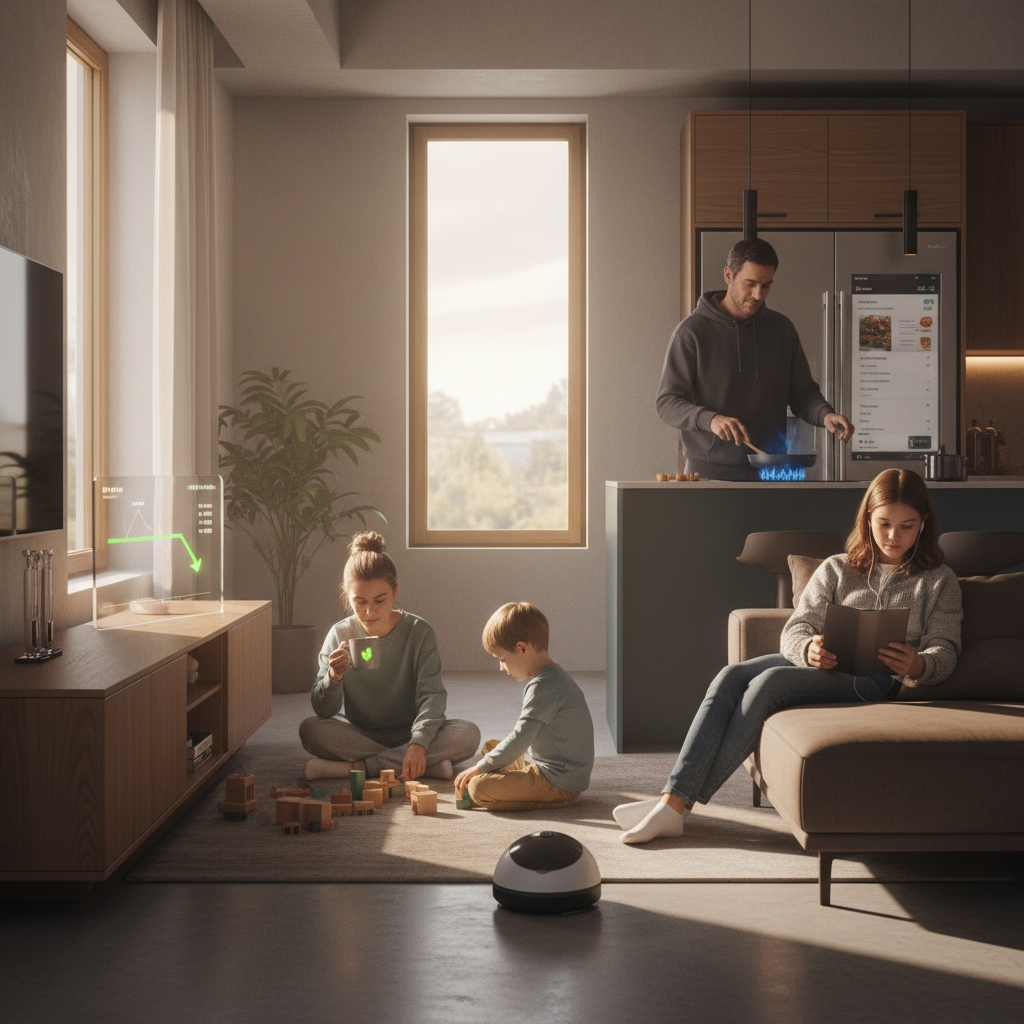
But how did we get here? And more importantly, what will a smart home look like in 2026? It’s easy to get lost in the hype, the promises of effortless living. In this guide, we’re cutting through the noise. We’ll explore the real-world benefits, the common frustrations, and the smart habits that will actually make your home a better place to live.
Why Smart Homes Exist: More Than Just Gadgets
The core idea behind a smart home isn’t about having the newest gizmo. It’s about creating a living space that anticipates your needs, simplifies your routines, and enhances your comfort and security. From smart thermostats that learn your temperature preferences to automated lighting that adjusts throughout the day, the goal is to make your home work *for* you.
Consider the evolution:
* **Early days:** It started with simple remote controls. Then came timers and basic automation.
* **The rise of the Internet of Things (IoT):** Suddenly, everything could connect. Smart plugs, lights, and appliances flooded the market.
* **Today:** We’re moving towards more integrated, AI-driven systems. Homes that learn your habits and adjust accordingly.
In 2026, we are seeing systems that are much more integrated and less reliant on single-brand solutions.
Misunderstandings and Misuses: The Path to Smart Home Frustration
The promise of a smart home often clashes with the reality. Many people make the same mistakes, leading to frustration and wasted money. Here’s a look at common pitfalls:
* **Over-reliance on automation:** Automating everything can lead to unexpected results. Imagine your lights turning on at 3 AM for no reason or the heat blasting in the middle of summer. It is best to start with a few automations and gradually add more.
* **Ignoring security:** Smart devices are vulnerable to hacking if not secured properly. This is a serious issue that should not be overlooked. Use strong passwords, enable two-factor authentication, and keep software updated.
* **Buying without a plan:** Jumping on the smart home bandwagon without thinking about compatibility or future needs is a recipe for a disjointed system.
* **Not understanding the network:** A weak or overloaded Wi-Fi network is the number one cause of smart home problems.
Common Long-Term Problems: What Really Goes Wrong
Even with the best intentions, smart homes can develop problems. Here’s what to watch out for:
* **Connectivity issues:** Devices that disconnect, apps that crash, and systems that fail to respond. This is often related to Wi-Fi, which can be improved by a newer router.
* **Software glitches:** Bugs, updates that cause problems, and apps that become outdated. Keeping your software up to date is extremely important.
* **Compatibility issues:** Devices from different brands that don’t play well together.
* **Device lifespan:** Smart devices don’t last forever. The average lifespan can vary, but generally ranges from 3-10 years.
Smart Usage and Maintenance Habits: The Keys to a Happy Home
To avoid problems and maximize the benefits of your smart home, adopt these smart habits:
* **Start with a strong foundation:** This means a reliable Wi-Fi network. Consider upgrading your router and, in larger homes, investing in a mesh Wi-Fi system.
* **Prioritize security:** Change default passwords, use strong, unique passwords for each device, and enable two-factor authentication whenever possible.
* **Regularly update software:** This is crucial for both security and performance. Set your devices to update automatically, or make it a monthly habit to check for updates.
* **Keep it clean:** Dust and debris can damage electronics. Gently clean lenses and screens. Use compressed air to clean out vents and ports.
* **Choose quality:** Invest in reputable brands known for their build quality and software support. This often means a longer lifespan and better overall performance.
* **Troubleshoot proactively:** Learn basic troubleshooting steps. Restart devices, check connections, and consult the manufacturer’s website for support.
If you are building a new home or remodeling, it is best to plan ahead for smart home technology.
2025–2026 Relevance: What’s New and What Matters Now
The smart home landscape is always evolving. Here’s what’s trending in 2026:
* **Matter:** The new standard promises to simplify compatibility between devices from different manufacturers.
* **AI-powered automation:** Systems that learn your habits and adjust settings automatically.
* **Enhanced security:** More emphasis on protecting your data and privacy.
* **Integrated energy management:** Smart thermostats, energy monitoring, and solar panel integration.
* **Voice control improvements:** Conversational AI that makes it easier to control your home.
* **Smart home hubs:** Devices that act as the central command for your smart home.
Future-Proof Advice: What Actually Matters Long-Term
The smart home of the future isn’t about chasing the latest trend. It’s about investing in technology that provides lasting value:
* **Focus on the fundamentals:** Prioritize a strong network, robust security, and a well-designed system that meets your needs.
* **Choose open standards:** Opt for devices that support Matter or other open protocols to avoid being locked into a single ecosystem.
* **Think about long-term support:** Check the manufacturer’s track record for software updates and customer support.
* **Keep it simple:** Don’t overcomplicate your system. Start small, and gradually add features as needed.
* **Design for flexibility:** Your needs will change over time. Choose a system that can be easily expanded and updated.
* **Consider a professional:** If you’re not comfortable with the technical aspects of smart home technology, don’t hesitate to consult with a professional.
For further insights, consider checking out this article on the [Home Appliance Health Check: Smart Upgrades, Common Pitfalls, and the Road to 2026], which touches on similar themes.
FAQ: Your Smart Home Questions Answered
Here are some common questions about smart homes:
**Q: How long do smart devices last?**
A: The lifespan varies. Some devices can last 3-10 years, depending on factors such as build quality, usage, and software support.
**Q: What are the biggest security risks?**
A: Weak passwords, lack of software updates, and unsecured networks. Always use strong passwords, enable two-factor authentication, and keep your devices updated.
**Q: How can I improve my Wi-Fi for smart home devices?**
A: Upgrade your router, position it centrally, and consider a mesh Wi-Fi system for larger homes.
**Q: What is Matter, and why is it important?**
A: Matter is a new standard designed to improve compatibility between smart home devices from different manufacturers.
**Q: Should I hire a professional to set up my smart home?**
A: If you’re not comfortable with the technical aspects, a professional can help design, install, and maintain your system.
**Q: How do I troubleshoot a device that isn’t working?**
A: Start by restarting the device and checking the connection. Then, check for software updates. Consult the manufacturer’s website for support.
**Q: What is the best way to extend the lifespan of my smart home devices?**
A: Keep everything updated, choose the right location, and clean your devices regularly.
**Q: Are smart homes worth the investment?**
A: Absolutely, if you plan carefully and prioritize the features that improve your daily life.