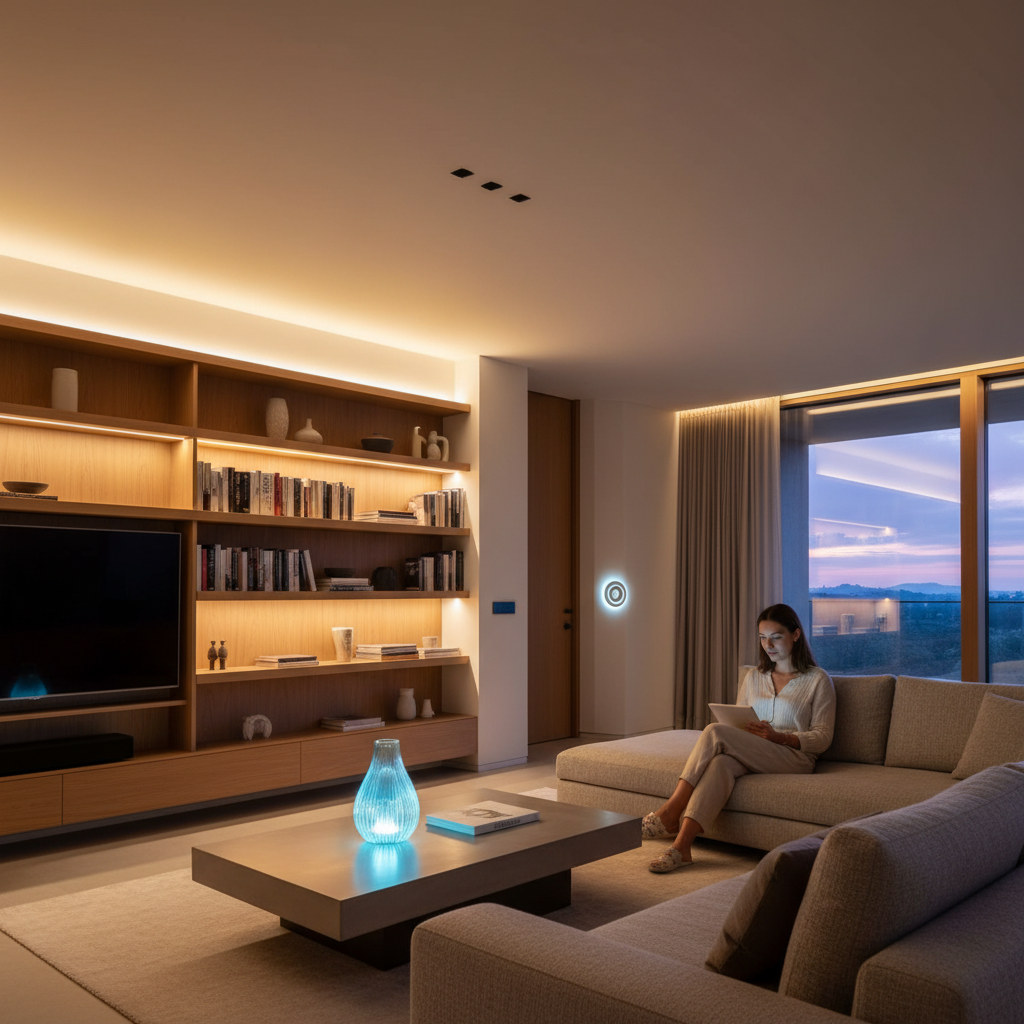
It’s a chilly evening in early March 2026, and the wind is howling outside. You’re curled up on your sofa, enjoying a good book. As the sun sets, the lights in your living room automatically dim to a warm, inviting glow. Your smart lighting system, attuned to the time of day and your preferences, has created the perfect ambiance for a relaxing evening. This isn’t science fiction; it’s the reality of smart lighting, and it’s becoming increasingly common in homes across the UK and beyond.
But smart lighting is about more than just convenience. It’s about energy efficiency, creating the right mood, and enhancing security. It’s a key component of a modern, future-ready home.
## Why Smart Lighting? Beyond the Basics
So, why are so many people upgrading to smart lighting? The reasons are varied, but several key benefits stand out:
* **Energy Efficiency:** Traditional incandescent bulbs waste a lot of energy. Smart LED bulbs, on the other hand, consume significantly less power. You can further increase savings with motion sensors that turn lights off in empty rooms or by scheduling lights to dim during peak hours. This can translate into real savings on your electricity bill.
* **Customization and Ambiance:** Smart lighting offers a level of control that traditional lighting simply can’t match. You can adjust the colour temperature and brightness to create the perfect mood for any occasion. Whether you want bright, cool light for focused work or warm, inviting light for a dinner party, smart lights can adapt.
* **Convenience and Automation:** With smart lighting, you can control your lights from your smartphone or with voice commands. You can set up schedules to automatically turn lights on and off, or even have them respond to other smart devices in your home. Imagine your lights turning on automatically as you approach your home, or changing colour to alert you to a security breach.
* **Enhanced Security:** Smart lighting can make your home safer by deterring intruders. You can set lights to turn on and off at random times when you’re away, making it appear as if someone is home. Motion-activated lights can also illuminate pathways and deter potential burglars.
* **Health and Wellness:** Smart lighting can also contribute to your well-being. Circadian rhythm bulbs mimic natural daylight to improve sleep cycles. You can also use blue-light filters to reduce eye strain, especially in the evening.
## Smart Lighting Misconceptions: What People Get Wrong
Despite all the advantages, there are some common misunderstandings about smart lighting:
* **It’s too complicated:** While early smart home systems were complex to set up, today’s smart lighting systems are designed to be user-friendly. Many systems offer simple, intuitive apps and easy integration with voice assistants.
* **It’s only for tech enthusiasts:** Smart lighting is for everyone. It’s not just about flashy features; it’s about making your home more comfortable, efficient, and secure.
* **It’s expensive:** While the initial cost of smart bulbs and systems can be higher than traditional lighting, the long-term energy savings and added features can make it a worthwhile investment. Also, smart lighting can be very affordable. For instance, the Wiz Tunable bulb is around $10.
* **It’s unreliable:** Connectivity issues are a common concern, but modern smart lighting systems are increasingly reliable. Make sure to have a strong Wi-Fi signal, and consider using a smart hub for increased stability.
## Common Long-Term Problems and How to Avoid Them
Even with the best intentions, smart lighting can present some challenges. Here are some common problems and how to avoid them:
* **Connectivity issues:** The most common problem is that smart lights may lose connection to your Wi-Fi network. To avoid this, ensure your router is in a central location and that your lights are within range. Using a Wi-Fi extender can also boost the signal. Consider using a Matter-over-Thread system for local reliability and better connectivity.
* **Bulb compatibility:** Not all smart bulbs are compatible with all fixtures, dimmers or smart home systems. Always check compatibility before purchasing. For example, some older dimmer switches may not work with smart bulbs.
* **App and hub problems:** Software glitches, app updates, and hub malfunctions can disrupt your smart lighting setup. Regularly update your smart lighting app and firmware. Consider a Matter-compatible hub to ensure cross-platform compatibility.
* **Security vulnerabilities:** As with any connected device, smart lights can be vulnerable to hacking. Use strong passwords for your Wi-Fi network and smart home accounts. Keep your firmware up to date to patch any security holes.
* **”Dead Switch” Problem:** If the physical wall switch is turned off, the smart bulbs lose power and become unusable. A solution to this is to replace the wall switch with a smart switch to keep the power flowing.
## Smart Usage and Maintenance Habits for 2026
To get the most out of your smart lighting system, follow these smart usage and maintenance habits:
* **Regularly update firmware:** Manufacturers release updates to fix bugs and improve performance. Make sure your bulbs, hub, and app are always up to date.
* **Optimize your Wi-Fi network:** Ensure your router is broadcasting on the 2.4GHz band, as this is what many smart lighting devices use. Place your router in a central location and consider a Wi-Fi extender if needed.
* **Check your automation settings:** Review your schedules and automation rules to ensure they’re working as intended.
* **Use voice control:** Voice control via Alexa, Google Assistant, or Siri can make it easier to manage your lights.
* **Experiment with different lighting scenes:** Don’t be afraid to try different colour temperatures and brightness levels to find what works best for each room and activity.
* **Monitor your energy usage:** Use the smart lighting app or an energy-auditing app to track your energy consumption and identify ways to save even more.
## Future-Proofing Your Smart Lighting: What Really Matters
As smart home technology evolves, it’s essential to future-proof your investment. Here’s what to consider:
* **Matter Compatibility:** Matter is a new smart home standard that allows devices from different manufacturers to work together seamlessly. Choosing Matter-compatible devices ensures your smart lights will be compatible with other smart home devices, regardless of the brand.
* **Thread Support:** Thread is a low-power, mesh networking protocol that provides a fast and reliable connection for smart home devices. Devices with Thread support will be more responsive and less prone to connectivity issues.
* **Focus on the Switch:** Instead of replacing every bulb with a smart bulb, consider replacing your existing light switches with smart switches. This approach gives you greater control over your lighting and ensures that anyone can operate your lights.
* **Consider a Hub:** While some smart lights work without a hub, a smart hub can provide greater stability, expanded features, and improved compatibility.
* **Prioritize Quality:** Invest in high-quality smart lighting products from reputable brands. While budget options can be tempting, they may not offer the same level of performance, reliability, and longevity.
In 2026, the best smart lighting to buy is a Matter-over-Thread system. This guarantees your fixtures work across platforms and ensures sub-second response times and local reliability.
## Smart Lighting FAQ: Your Questions Answered
Here are some frequently asked questions about smart lighting:
**Q: Are smart lights worth the investment?**
A: In most cases, yes. Smart lights offer energy savings, convenience, and enhanced security, which can justify the higher upfront cost.
**Q: What is the best way to get started with smart lighting?**
A: Start with smart bulbs for easy installation and control. Then, expand your system with smart switches, a smart hub, and other smart home devices as needed.
**Q: Do smart lights work without Wi-Fi?**
A: Some smart lights require Wi-Fi, while others use protocols like Zigbee or Z-Wave, which connect to a smart hub. Even if your smart lights don’t require Wi-Fi, you’ll still need an internet connection to use voice control or control your lights remotely.
**Q: How do I troubleshoot smart lights that won’t turn on?**
A: First, check the power source and ensure the bulb is screwed in properly. Then, try turning the light off and on to reset the connection. If that doesn’t work, check your app and Wi-Fi connection. You may also have to reset your smart bulb.
**Q: How can I save money with smart lighting?**
A: Use motion sensors to automatically turn off lights in empty rooms. Schedule your lights to dim or turn off during peak energy hours. Monitor your energy usage with the smart lighting app or an energy-auditing app.
**Q: What is Matter?**
A: Matter is a new smart home standard that allows devices from different manufacturers to work together seamlessly.
**Q: What are the benefits of a smart hub?**
A: A smart hub provides greater stability, expanded features, and improved compatibility. It also allows you to control all your smart home devices from a single app.
**Q: How can smart lighting improve my home security?**
A: You can set lights to turn on and off at random times when you’re away, making it appear as if someone is home. Motion-activated lights can also illuminate pathways and deter potential burglars.
In conclusion, smart lighting in 2026 is no longer a futuristic luxury but a practical, beneficial addition to any modern home. By understanding the technology, avoiding common pitfalls, and following smart usage habits, you can create a more comfortable, efficient, and secure living space. Embrace the future of home illumination and experience the difference smart lighting can make.