The alarm blares, and it’s go time. Before you’ve even had your chai, the day’s momentum is already a runaway train. You’re rushing to get ready, maybe grabbing a pre-packaged breakfast, and then it’s a frantic dash out the door, often forgetting something important. This isn’t just a bad morning; it’s a symptom of a larger issue: the subtle inefficiencies that plague our daily routines, especially the crucial morning hours. These small hiccups, when added up, don’t just steal minutes; they siphon off mental energy, introduce unnecessary stress, and set a chaotic tone for the rest of the day.
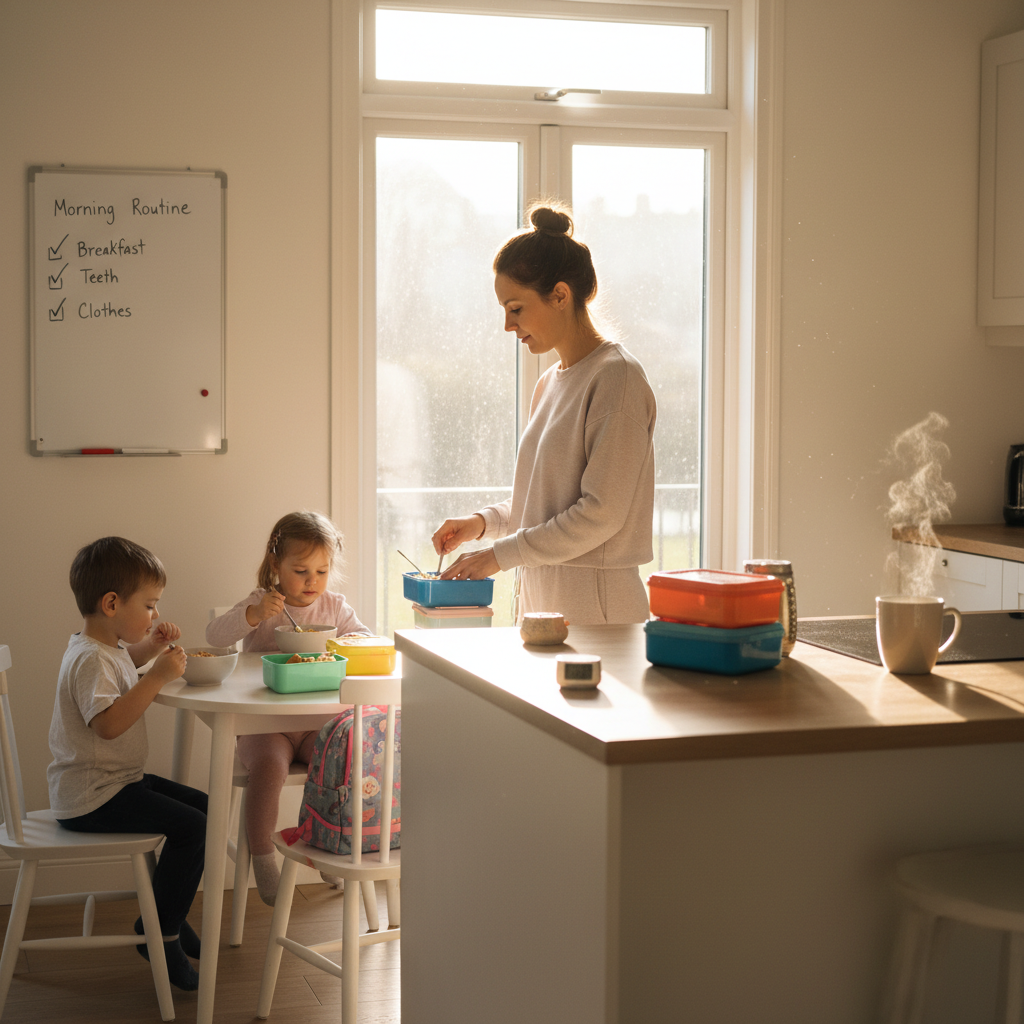
We often overlook these morning inefficiencies because they feel like small, unavoidable annoyances. “It’s just how it is,” we tell ourselves. But the reality is, what feels like a minor inconvenience is actually a crack in our daily system, a point of friction that can be smoothed out with thoughtful, simple improvements. These aren’t grand gestures or drastic lifestyle overhauls. They are small, system-level adjustments that, over time, build a foundation for a more peaceful, efficient, and controlled start to your day. This is about smart living – not about living less, but living better, with less friction.
The Hidden Costs of a Haphazard Morning
Think about it: how often have you found yourself rummaging through drawers for keys, frantically searching for that important document, or realizing halfway to work that you forgot your lunch? Each of these moments, while seemingly minor, carries a cost.
First, there’s the **time cost**. Those few minutes spent searching for lost items, or re-doing tasks because you rushed, accumulate. Over a week, that’s an hour. Over a month, it’s a significant chunk of your valuable time that could be spent on something more productive or enjoyable.
Then comes the **energy cost**. Rushing is exhausting. The mental energy expended in frantic searching, in dealing with the anxiety of being late, or in the sheer physical act of rushing depletes your reserves before your day has even truly begun. This leaves you feeling drained, less focused, and more prone to making mistakes throughout the day.
The **stress cost** is perhaps the most insidious. A chaotic morning creates a background hum of anxiety that can follow you. This chronic stress impacts your mood, your decision-making, and even your physical health over the long term. It’s the opposite of smart living, which aims to reduce, not increase, daily stressors.
Finally, there’s the **financial cost**, though often indirect. Forgetting your lunch means buying expensive takeaway. Rushing to catch a train might mean paying for a taxi. Misplacing important bills could lead to late fees. These aren’t the headline-grabbing expenses, but they are real drains on your resources.
Common Morning Pitfalls and How We Fall Into Them
Why do we let these inefficiencies creep in? It often boils down to a few common habits and a lack of intentional system design.
* **The “I’ll deal with it later” Syndrome:** This is a classic. We leave things scattered, unfinished, or unorganized because we’re too tired at night or too rushed in the morning. This “later” often never comes, creating a perpetual state of mild disarray. A pile of mail on the counter, a bag of items meant for donation still by the door, a list of tasks for tomorrow scribbled on a random piece of paper – these are all symptoms.
* **Lack of Preparation:** The most obvious culprit. Not laying out clothes the night before, not packing lunches, not preparing the coffee maker. These simple preparatory steps are often skipped in favour of “just one more minute” of sleep or relaxation, which then translates into frantic activity later.
* **Decision Fatigue:** Making too many decisions in the morning adds to the mental load. What to wear, what to eat, what to pack, what to do first. If these aren’t pre-decided or automated, they contribute to the rush.
* **Over-reliance on Digital Reminders (without a system):** While digital tools are great, simply having apps ping you isn’t enough. If there’s no connected system for *acting* on those reminders (e.g., a designated place to put the item that needs to be taken), they become background noise.
* **Underestimating Transition Time:** We often think we can “squeeze in” one more thing before leaving, underestimating how long even simple tasks take when you’re not in the flow. This leads to being late and the subsequent rush.
Building Your Smart Morning System: Small Changes, Big Impact
The good news is that transforming your mornings doesn’t require a complete lifestyle overhaul. It’s about implementing small, system-level changes that create friction-free transitions.
1. The “Command Centre” Approach
Designate a small, consistent spot near your exit (front door, garage door) as your “Command Centre.” This is where crucial items live and where pre-planned items are staged.
* **Keys, Wallet, Phone:** These essentials *always* live here. When you come in, they go straight to the Command Centre. When you leave, you know exactly where they are. This single habit eliminates a massive source of morning panic.
* **The Daily Bag/Briefcase:** Pack your work bag, gym bag, or school bag the night before and place it at the Command Centre. No last-minute scrambling.
* **”Out the Door” Items:** This is for things that need to leave the house but aren’t carried daily. Think library books, returns, items for donation, or things you need to give to someone. A small basket or tray at the Command Centre works wonders.
2. The “2-Minute Rule” for Evening Tidy-Up
This is a cornerstone of efficient living. If a task takes less than two minutes, do it *now*. Applied to the evening, this means:
* **Kitchen Reset:** Clear the counters, load the dishwasher (or at least rinse dishes), wipe down surfaces. A clean kitchen makes breakfast preparation faster and more pleasant.
* **Outfit Prep:** Lay out your clothes for the next day. This includes underwear, socks, and accessories. It removes a significant morning decision and potential conflict (e.g., “Is this clean? Does it match?”).
* **Lunch Prep:** If you pack lunch, do as much as possible the night before. Chop veggies, portion snacks, pack non-perishables.
3. Streamlining Breakfast: The “Batch and Automate” Method
Breakfast is often a source of morning rush because it requires thought and preparation when you’re groggy.
* **Weekend Batching:** Dedicate an hour on the weekend to prepare grab-and-go breakfast items. Think overnight oats, pre-portioned smoothie packs (just add liquid and blend), baked muffins or breakfast bars, or hard-boiled eggs. Store them in easily accessible containers.
* **”Set It and Forget It” Coffee:** If you’re a coffee drinker, invest in a programmable coffee maker. Set it the night before so fresh coffee is ready when you wake up. For tea drinkers, having your mug, tea bag, and kettle ready to go saves precious minutes.
* **Simple Staples:** For days when even batch-prepped items feel like too much, have a few ultra-simple, healthy staples ready. A piece of fruit, a small container of yogurt, or a handful of nuts can be a lifesaver.
4. Optimizing Your Getting-Ready Routine
This is where time-saving can be significant.
* **”Uniform” Thinking:** For workdays, consider adopting a simplified wardrobe approach. This doesn’t mean wearing the same thing every day, but having a set of outfits that are interchangeable and appropriate for your workplace. This drastically cuts down on “what to wear” decisions.
* **Pre-set Grooming Station:** Keep all your essential grooming items (toothbrush, toothpaste, hairbrush, minimal skincare) in one place, perhaps in a caddy. If you have a small bathroom, this might be a drawer or a shelf. This avoids searching for items and makes the process smoother.
* **Digital Detox Before Bed (and Morning):** Resist the urge to scroll through your phone in bed. This disrupts sleep and makes waking up harder. Similarly, try to avoid immediately grabbing your phone upon waking. Give your brain a chance to ease into the day. This allows you to be more present and less reactive.
5. The Power of a “Ready” Space
Beyond the Command Centre, think about your entire morning environment.
* **Clear Surfaces:** A cluttered space leads to a cluttered mind. Spend a few minutes each evening clearing key surfaces – your desk, your kitchen counter, your bedside table.
* **Pre-set Environment:** If possible, set up elements of your morning the night before. For example, if you exercise in the morning, have your workout clothes laid out and your water bottle filled. If you read, have your book on your bedside table.
Modern Relevance: Smart Living in a Fast-Paced World
In today’s hyper-connected, always-on world, the pressure to “do more” is immense. Our mornings are often the first battleground. The efficiency gains from these simple systems aren’t just about saving time; they’re about reclaiming control.
* **Reducing Digital Overload:** By having physical systems in place (like the Command Centre), you rely less on digital reminders that can become overwhelming. You create tangible anchors for your day.
* **Mental Bandwidth Preservation:** Every small decision or frantic search consumes mental energy. By automating and simplifying the morning routine, you free up cognitive resources for the more important tasks and challenges of the day.
* **Enhanced Safety:** A disorganized morning can lead to safety oversights – leaving doors unlocked, forgetting to turn off appliances, or rushing in a way that increases the risk of accidents. A well-oiled routine minimizes these risks. Imagine not having to rush out the door, potentially leaving the stove on; the peace of mind is invaluable.
* **Better Relationships:** When you’re not rushing and stressed, you’re more present for your family or housemates. You can have a calmer breakfast together, a more mindful goodbye, or simply be in a better mood, positively impacting everyone around you.
Long-Term Benefits: Peace, Convenience, and Control
The cumulative effect of a consistently smooth morning routine is profound.
* **Reduced Stress and Anxiety:** Imagine starting your day feeling prepared and calm, rather than frazzled and behind. This sets a positive tone that can ripple through your entire day and week.
* **Increased Productivity:** When you’re not bogged down by morning chaos, you can approach your work and tasks with greater focus and efficiency.
* **More “Me Time”:** Even an extra 15-20 minutes gained from a streamlined routine can be repurposed. It could be for quiet reflection, a short meditation, enjoying your breakfast without a rush, or even just a few extra minutes of comfortable silence before the day’s demands begin.
* **A Sense of Mastery:** Successfully managing your morning routine breeds a sense of accomplishment and control. This feeling can empower you to tackle other areas of your life with the same efficiency-focused mindset. You start to feel like you’re in charge of your day, not the other way around.
Frequently Asked Questions (FAQs)
**Q1: I live in a small apartment. Where can I even create a “Command Centre”?**
A: A Command Centre doesn’t need much space. It can be a small wall-mounted shelf near your door, a designated corner of a console table, or even a stylish tray on a small entryway bench. The key is consistency and proximity to your exit.
**Q2: I’m terrible at preparing things the night before. How can I build this habit?**
A: Start incredibly small. Pick just *one* thing to prepare the night before for a week. Maybe it’s just laying out your work clothes. Once that feels easy, add another item, like packing your lunch bag. Gradually build the habit. Reward yourself for consistency.
**Q3: My mornings are hectic because of kids. How can these tips apply?**
A: These systems can be even *more* impactful with children! Involve them in age-appropriate ways. Have them pack their own school bags (with your help), lay out their own clothes, or help with a quick kitchen reset. Consistency in family routines is key, and a prepared parent is a less-stressed parent.
**Q4: What if I’m not a morning person?**
A: The goal isn’t necessarily to become a morning person, but to make the transition into the day as smooth as possible. These systems reduce the need for active decision-making and mental effort first thing, making the process less taxing even if you’re not naturally an early riser. Having things ready means less *thinking* required.
**Q5: I don’t eat breakfast. Does this still apply?**
A: Yes, the principles of preparing for your day and reducing morning friction are universal. If you don’t eat breakfast, focus on streamlining your getting-ready process, ensuring your “Command Centre” is effective, and preparing any items you *do* need for the first part of your day (like a packed work bag or pre-set coffee).
**Q6: I tried meal prepping once, and it felt like a huge time sink. Any advice?**
A: Meal prepping doesn’t have to be an all-day Sunday event. Focus on “batching” components or simple items, rather than full meals. For breakfast, think overnight oats or smoothie packs. For lunch, maybe just chop vegetables. For dinner, pre-portioning ingredients for quick weeknight meals can save significant time later. You can even explore smart kitchen appliances that automate cooking or assist with meal prep, making the entire process more efficient and less of a chore. For instance, a smart TV can be a great way to unwind and decompress after a productive, organized day, offering entertainment without adding to your morning stress.
**Q7: How do I avoid falling back into old habits?**
A: Regular self-assessment. Once a week, take five minutes to review your morning. What went well? What was a struggle? Identify one small adjustment you can make for the following week. Consistency is more important than perfection. Think of it as continuous improvement for your daily system, much like maintaining any other aspect of your smart living approach.
**Q8: Can these systems help me save money?**
A: Absolutely. By packing lunches, you avoid expensive takeaway. By not forgetting essential items, you prevent the need for last-minute purchases or replacement costs. By avoiding frantic rushes, you reduce the likelihood of impulsive spending or needing to pay for expedited services. These small savings add up significantly over time, contributing to your overall financial well-being. For more insights into smart financial habits and efficient living, explore resources on [Josephs Well](https://josephswel.info).