Every morning, the same scene unfolds. You stumble into the kitchen, bleary-eyed, seeking that essential jolt of caffeine. But instead of a smooth start, you’re met with a battlefield of clutter: a mountain of unwashed dishes, a countertop jungle of appliances, and the lingering aroma of last night’s dinner. Sound familiar? This isn’t just a minor inconvenience; it’s a daily drain on your time, energy, and overall well-being. Kitchen chaos is a silent saboteur, slowly eroding your peace of mind and your ability to enjoy the simple pleasure of a home-cooked meal.
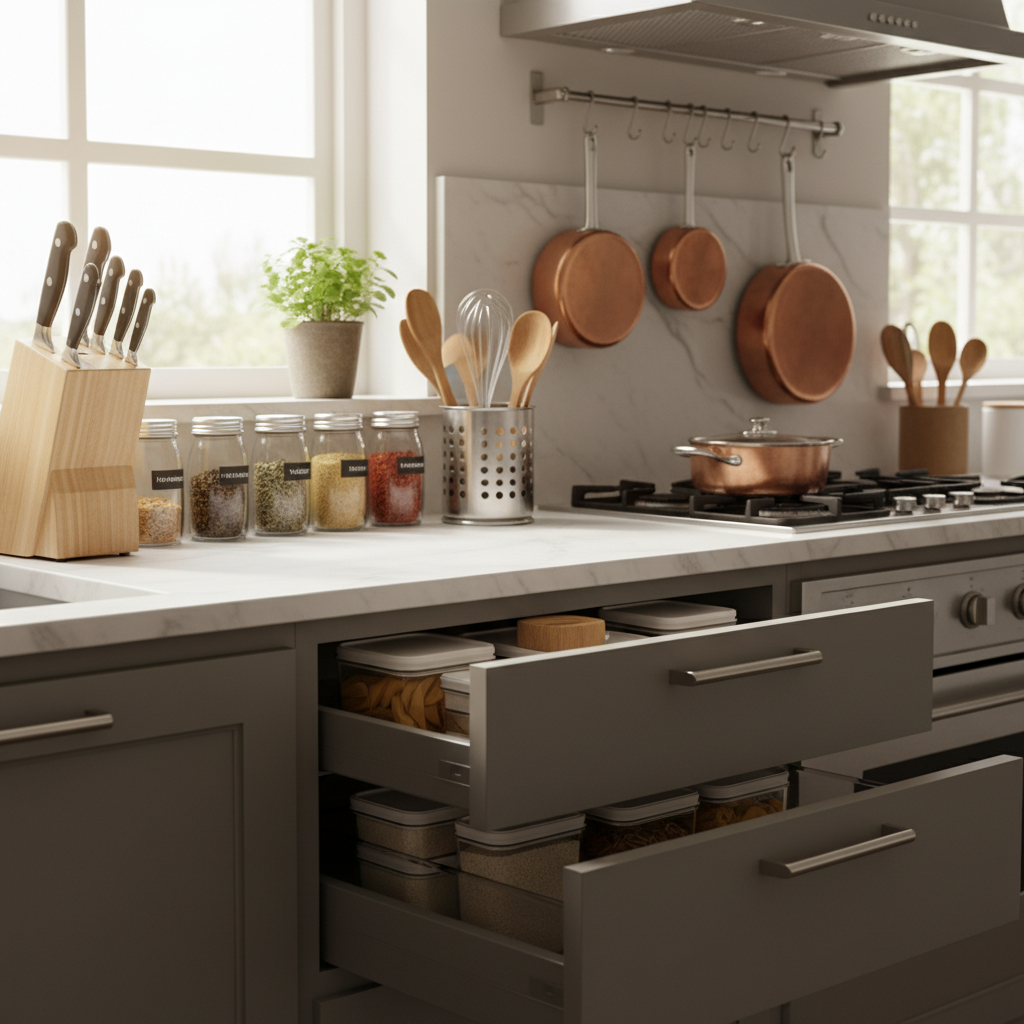
The Kitchen’s Hidden Costs: More Than Meets the Eye
We often underestimate the impact of a disorganized kitchen. It’s easy to dismiss it as a cosmetic issue, but the consequences run much deeper. Let’s break down the hidden costs of a cluttered culinary space:
- Time Thief: How much time do you spend searching for ingredients, cleaning up spills, or rearranging items to find what you need? These small moments add up throughout the day and week, stealing valuable time that could be spent on more enjoyable or productive activities.
- Energy Drain: Navigating a messy kitchen is mentally taxing. The constant visual clutter and the need to maneuver around obstacles contribute to decision fatigue, leaving you feeling drained and less motivated.
- Wasted Resources: A disorganized kitchen often leads to food waste. Forgotten leftovers, expired ingredients lurking in the back of the fridge, and duplicated purchases are all too common.
- Safety Hazards: A cluttered kitchen poses several safety risks, including tripping hazards, fire hazards from overloaded outlets or flammable materials near the stove, and cross-contamination from improper food storage.
- Stress Factor: A chaotic environment creates a sense of unease and stress. The kitchen is often the heart of the home, and a disorganized one can negatively impact your overall mood and family dynamics.
The Culprit: Common Kitchen Inefficiencies
The path to a streamlined kitchen begins with identifying the common culprits behind the chaos. These are the habits and practices that contribute to the problem:
- Lack of a “Landing Zone”: Do you have a designated spot for keys, mail, and bags as you enter the kitchen? Without a proper landing zone, these items tend to accumulate on countertops, quickly contributing to the clutter.
- Dishwashing Delays: Putting off the dishes, even for a few hours, allows the mess to multiply. Dishes pile up, countertops become covered, and the overall sense of order diminishes.
- Inefficient Food Storage: Are your pantry and refrigerator organized in a way that allows you to easily see what you have? Overlooking ingredients, buying duplicates, and struggling to find items lead to waste and frustration.
- Poor Countertop Management: Do you have a system for keeping your countertops clear of unnecessary items? Leaving appliances, gadgets, and other items on the counter contributes to a cluttered look and a less functional workspace.
- Ignoring Expiration Dates: Failing to regularly check and discard expired food items leads to unnecessary waste and potential health hazards.
- Ignoring “Dead Zones”: Failing to utilize every space in your kitchen. Areas like the backs of cabinets or the space above the refrigerator can become dead zones.
A Systemic Approach: Implementing Kitchen Improvements
Transforming your kitchen from a chaotic space to an organized oasis requires a systemic approach. Here’s a breakdown of simple, yet effective, improvements:
1. Create a “Landing Zone”
The moment you enter the kitchen (or any room), have a designated spot for items that you carry with you. This could be a small table, a tray, or a wall-mounted organizer. This prevents these items from migrating to your countertops, thereby reducing clutter before it even starts. Place your keys, mail, and other small items in this designated space to avoid countertop clutter.
2. The “After-Meal” Ritual: Instant Clean Up
Make dishwashing an immediate post-meal ritual. Even if you don’t have time for a full cleanup, rinse dishes and load them into the dishwasher or sink immediately. This prevents a pile-up and keeps your countertops clear. Even a quick wipe-down of surfaces after cooking keeps things manageable.
3. Optimizing Food Storage: The “First In, First Out” Rule
Implement the “First In, First Out” (FIFO) principle in your pantry and refrigerator. Place newly purchased items behind older ones to ensure that older items are used before they expire. Use clear containers and labels to make it easy to see what you have. Regularly check expiration dates and discard anything past its prime. Consider using clear containers in the refrigerator, labeled shelves in the pantry, and a system for tracking what you have on hand.
4. Countertop Management: Less is More
The goal is to keep as much of your countertop space clear as possible. Only keep frequently used appliances and items out. Store less-used appliances in cabinets or drawers. Consider a kitchen island or a rolling cart for additional storage space. A good rule of thumb: If you haven’t used an appliance in the last month, put it away.
5. Streamline Your Pantry: Make It Visible
Organize your pantry using clear containers, labels, and shelves. Group similar items together, such as baking supplies, snacks, and canned goods. This makes it easier to find what you need and prevents duplicate purchases. The visibility is key. Clear containers allow you to see at a glance what you have and what you need to replenish.
6. Utilize Vertical Space: Think Upward
Don’t let vertical space go to waste. Use shelves, racks, and organizers to maximize cabinet and pantry space. Hang pots and pans from a ceiling rack or use a shelf divider to create extra storage space in your cabinets. Over-the-door organizers can be a great way to store spices, cleaning supplies, and other items.
7. Regular Purge and Declutter: The “One-In, One-Out” Rule
Regularly go through your kitchen and declutter items you don’t use or need. Donate or discard items that are broken, outdated, or you no longer use. Consider the “one-in, one-out” rule: for every new item you bring into the kitchen, get rid of something else. This prevents clutter from accumulating over time.
Modern Lifestyle Relevance: Kitchen Efficiency in the Age of Constant Motion
In today’s fast-paced world, the demands on our time and attention are greater than ever. Between work, family, and social commitments, it’s easy to feel overwhelmed. A well-organized kitchen becomes even more crucial in this context. It’s a sanctuary of efficiency and calm in a world of constant motion.
A streamlined kitchen frees up time and mental energy, allowing you to focus on the things that truly matter. It allows you to:
- Save Time: Spend less time searching for ingredients or cleaning up messes, and more time enjoying your meals or pursuing other interests.
- Reduce Stress: A calm, organized kitchen reduces feelings of overwhelm and promotes a sense of peace.
- Improve Health: Make it easier to prepare healthy meals at home, which is essential to your overall well-being.
- Reduce Waste: Prevent food waste by being organized and using the items in your kitchen efficiently.
Long-Term Benefits: Peace of Mind and Culinary Enjoyment
Investing in a well-organized kitchen pays dividends in the long run. The benefits extend far beyond a tidy space; they touch on your overall well-being and quality of life.
A well-organized kitchen contributes to:
- Increased Peace of Mind: Knowing where everything is and having a functional workspace reduces stress and promotes a sense of control.
- Enhanced Culinary Enjoyment: Cooking becomes a pleasure, not a chore. You’re more likely to experiment with new recipes and enjoy preparing meals at home.
- Improved Family Dynamics: A well-organized kitchen fosters a sense of order and harmony, making it a more inviting space for the whole family.
- Long-Term Cost Savings: Reduced food waste, fewer impulse purchases, and less need to eat out contribute to significant cost savings over time.
The Kitchen in a Smart Home
As smart home technology advances, the kitchen is becoming a hub of efficiency and convenience. From smart appliances to voice-controlled assistants, technology can further streamline your kitchen routines. For example, a smart refrigerator can track expiration dates, a smart oven can preheat automatically, and voice assistants can provide recipes and timers. This is the future of smart living.
FAQ: Your Kitchen Questions Answered
Here are some frequently asked questions about kitchen organization:
1. How often should I declutter my kitchen?
Aim for a quick declutter at least once a month, or more often if needed. A deep clean and declutter should be done at least twice a year to maintain a streamlined space.
2. What’s the best way to store leftovers?
Use clear, airtight containers. Label them with the contents and the date. Store leftovers in the refrigerator for up to four days or in the freezer for longer storage.
3. How can I reduce food waste?
Plan your meals, make a grocery list, store food properly, use leftovers creatively, and regularly check expiration dates.
4. What are some essential kitchen organization tools?
Clear containers, labels, shelf dividers, drawer organizers, and a well-placed trash can and recycling bin are all essential.
5. How do I maintain an organized kitchen long-term?
Make it a habit to clean as you go, put things back in their place immediately, and regularly declutter. Establish systems and routines that support your goals.
6. What are some quick fixes for a messy kitchen?
Do the dishes, wipe down the counters, put away any clutter, and sweep or wipe down the floor. Even a quick ten-minute clean can make a big difference.
7. How can I get my family involved in keeping the kitchen organized?
Create clear expectations and assign tasks. Make it a team effort. Provide age-appropriate tasks for children, such as putting away their own dishes or wiping down the table.
8. What should I do with expired food?
Throw it away in the trash. Compost what is compostable.
By implementing these simple changes, you can transform your kitchen into a functional and enjoyable space. The journey to a streamlined kitchen is an investment in your well-being, your time, and your enjoyment of life. Small steps, consistently applied, create a ripple effect that will bring lasting benefits to your home and your life. Consider exploring “The Silent Siren Song of Notifications” to reduce the distractions that impact your time and routines. A calm and efficient kitchen is the cornerstone of smart living, paving the way for a more organized and fulfilling life.